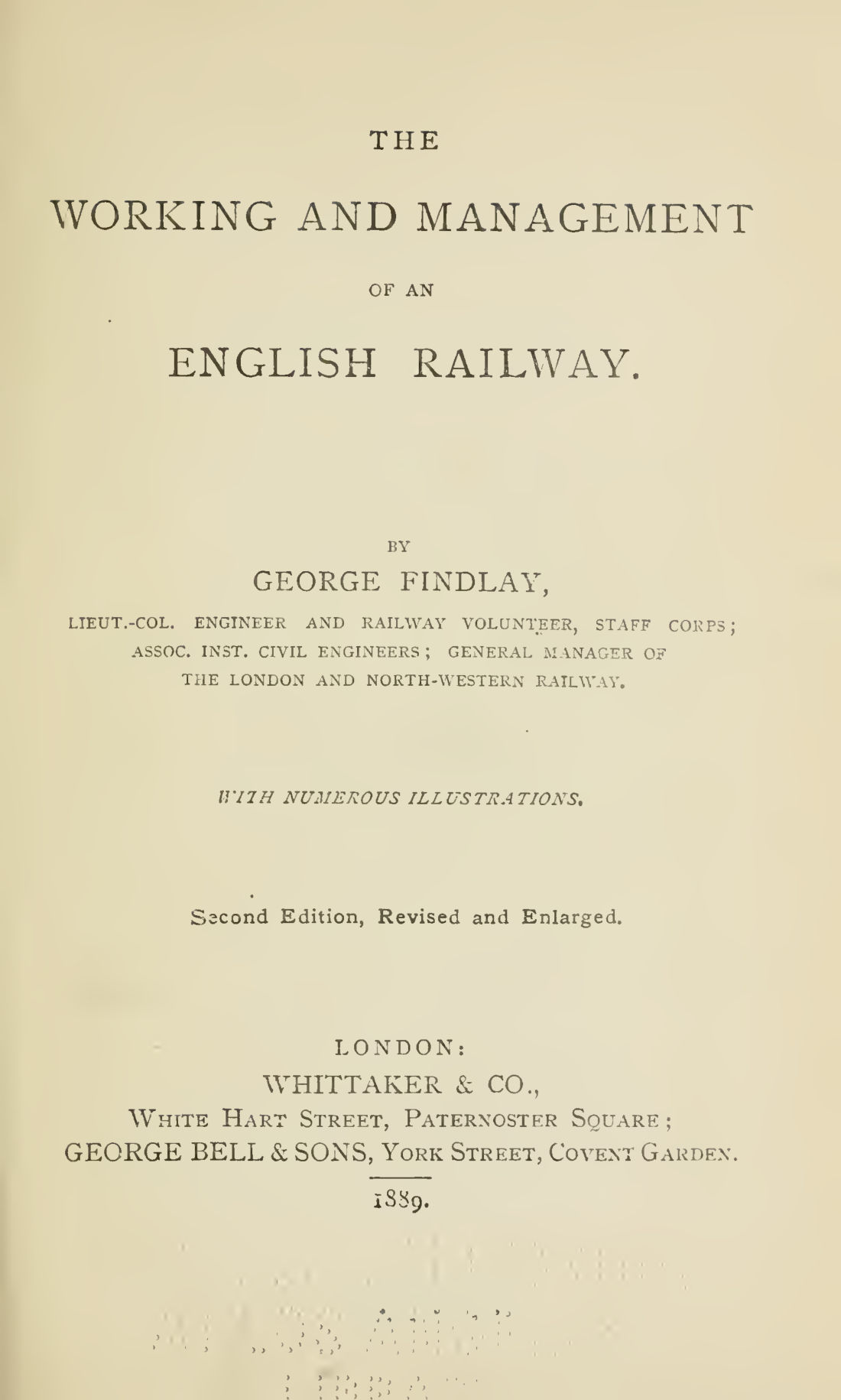
The working and management of an English railway
George Findlay · 1889 · 374 pages
Download it from your account as soon as you have paid, as often as you need.
About this book
George Findlay, General Manager of the London and North-Western Railway, wrote this pamphlet. Published in London by Whittaker & Co. and George Bell & Sons in 1889, the work is a second edition that has been revised and enlarged.
The text originated from a lecture delivered at the School of Military Engineering at the Brompton Barracks. It is a practical guide to the principles of constructing and managing a great English railway. The contents include chapters on Management, The Staff, The Permanent Way, Signals and Interlocking, and Telegraphs. Rolling stock is discussed in relation to engines, brake-power, carriages, and goods waggons. Further sections cover the working of trains, shunting and marshalling of goods, and the operation of goods stations. Other topics include rates and fares, the Railway Clearing House, the relation of the State to railways, and passenger traffic. The final chapters address the law between railway companies and the public, and the use of railways as a means of defence.
Details
- Title
- The working and management of an English railway
- By
- George Findlay
- Publisher
- London : Whittaker & Co. [etc.]
- Published
- 1889
- Kind of book
- Pamphlets, letters and histories
- Country
- Britain and Ireland
- Pages in the PDF
- 374
- Format
- PDF with a searchable text layer
- Scanned from the copy at
- University of California Libraries
Inside the book
More pamphlets, letters and histories
 United StatesThe Working and Management of an English Railway1890 · 374 pagesComplete PDF$14.99
 Britain and IrelandThe working and management of an English railway1891 · 405 pagesComplete PDF$14.99
 Britain and IrelandThe working and management of an English railway1891 · 429 pagesComplete PDF$14.99
 United StatesThe Working and Management of an English Railway1891 · 396 pagesComplete PDF$14.99
 United StatesThe world's highway [a proposal to construct a railway running between Calcutta and London1856 · 70 pagesComplete PDF$7.99
 United StatesThe yellow fever germ on coast and inland1879 · 32 pagesComplete PDF$7.99
 United StatesThe Yellowstone National Park1883 · 151 pagesComplete PDF$9.99
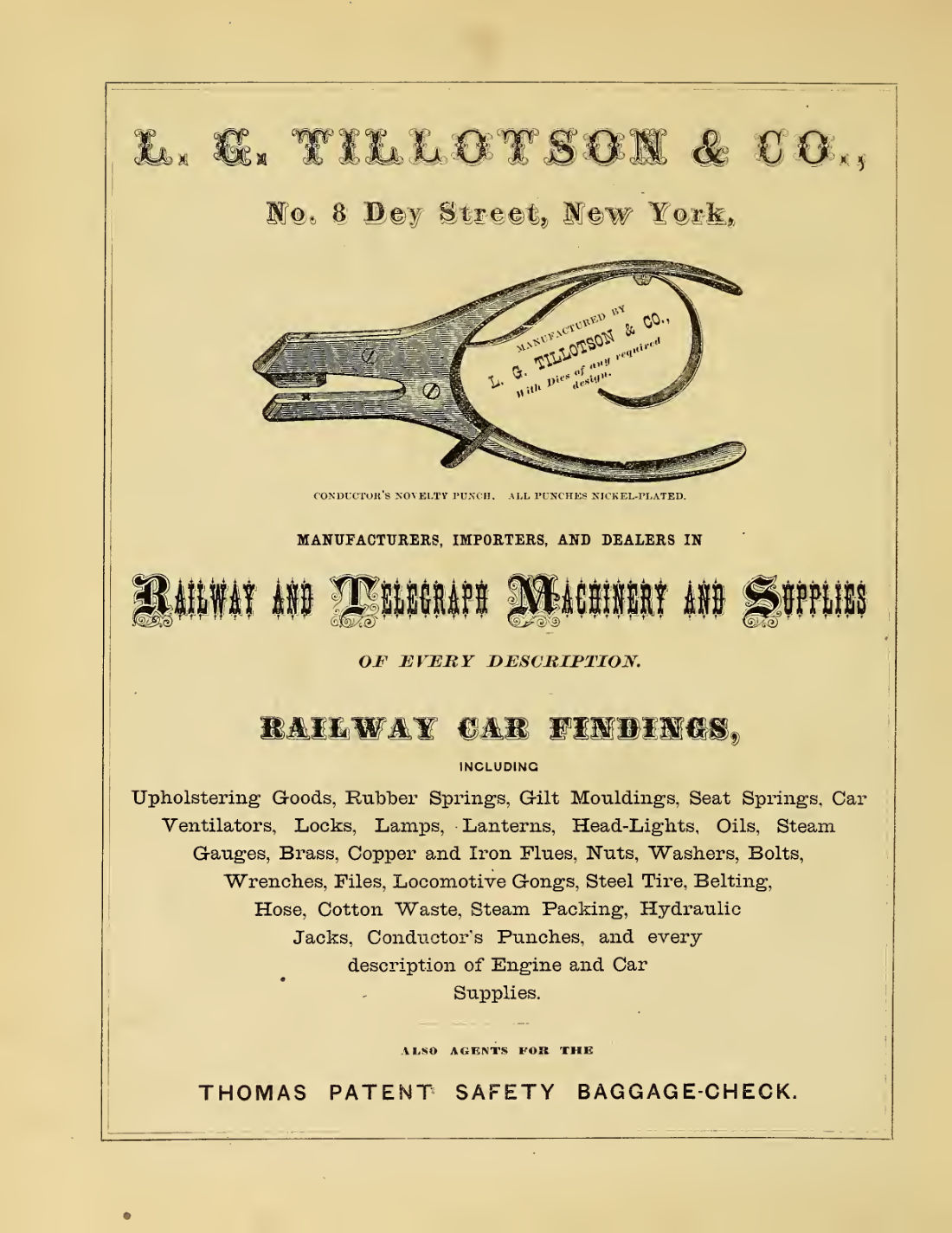 United StatesThomas' Safety Baggage Check1871 · 24 pagesComplete PDF$7.99